


Regentonne aufstellen: Ein umfassender Leitfaden für Ihren Garten
Die Nutzung von Regenwasser ist eine einfache und zugleich effektive Methode, Ihren Garten nachhaltig zu bewässern und den Wasserverbrauch zu reduzieren. Dieser Leitfaden zeigt Ihnen Schritt für Schritt, wie Sie eine Regentonne installieren, aufstellen und wie Sie damit einen wertvollen Beitrag zum Umweltschutz leisten können.

Why should you install a rain barrel?
Installing a rain barrel in your garden has several advantages:
- By using rainwater instead of tap water, you can significantly reduce your water consumption and the associated costs.
- Plant health: Rainwater is soft and free from chlorine, limescale and other chemicals that can be found in tap water. This can improve the health and growth of your plants.
- Environmental protection: The use of rainwater reduces the burden on the municipal water supply and reduces the ecological footprint of your household.
Choosing the right rainwater barrel
When choosing the right rainwater barrel, you should consider several factors to ensure that it meets your needs. Firstly, the volume of the barrel is important. It should be tailored to the size of your garden and your average water consumption. Smaller gardens can often manage with a 200-litre bin, while larger areas may need one or more bins with a capacity of 500 litres or more.
Materials also play a role. Plastic rain barrels are popular as they are lightweight, durable and available in many shapes and colours. Wooden barrels blend naturally into the garden, but require more maintenance to remain weatherproof. Metal barrels offer great longevity but can corrode over time if not treated properly. Also consider the design and possible additional features, such as integrated planters or the option to link multiple barrels together to increase water storage capacity.
Another option is concrete rain barrels. They are characterised by their enormous stability and durability and are particularly weather-resistant. Concrete also retains the temperature of the water very well, which reduces the formation of algae inside. These barrels are ideal for permanently installed rainwater systems and are also visually appealing.
Sustainable and inexpensive DIY ideas
There are many creative ways to water raised beds efficiently and in an environmentally friendly way without having to purchase expensive systems. Simple do-it-yourself solutions offer a good alternative, especially for hobby gardeners who value sustainability.
Here are some tried and tested ideas that are easy to implement:
- Build your own watering system using PET bottles: Drill holes in the lid, stick the bottle upside down in the soil, the water is slowly released.
- Clay cone with water bottle: Stick the clay cone into the soil and place a filled water bottle upside down on top. The clay slowly draws the water out of the bottle and releases it evenly into the soil.
- Moisture reservoir for plants: Combine your raised bed with plants that retain water in the soil, such as Marigolds or clover.
- Recycle old hoses: Drill small holes in an old garden hose and place it between the plants in the raised bed. Connect the hose to the water source to create a simple drip irrigation system that delivers water evenly and sparingly directly to the roots.
- Rainwater utilisation: A rainwater barrel with hose system combines a sustainable water supply with raised beds.
- Do-it-yourself ollas: Use self-made clay jugs or clay pots as underground water reservoirs. To do this, bury the containers in the raised bed up to the edge and fill them with water. They release the water slowly and evenly into the soil through the porous walls.
These sustainable DIY methods save water, reduce costs and promote environmentally conscious garden maintenance. In combination with the high-quality solutions from WISY, efficiency can be further increased for healthy plant growth and resource-saving irrigation in your own garden.
How much water does a raised bed need?
The water requirement of a raised bed depends heavily on the plants growing in it and the composition of the soil. While herbs often manage with little moisture, vegetables such as tomatoes or cucumbers require significantly more water. The type of soil also plays an important role. Sandy soil dries out more quickly, while humus-rich soil retains water for longer. A good rule of thumb is 10 to 20 litres of water per square metre, depending on the weather and plant type. With a well-designed raised bed irrigation system, the amount of water can be adjusted and controlled efficiently.
To avoid waterlogging and evaporation losses, deep watering is recommended instead of surface watering. This strengthens the roots and retains moisture in the soil for longer. A raised bed with a water reservoir is particularly practical here, as it releases moisture continuously and ensures an even supply. Checking the soil moisture, for example with a finger test or a moisture meter, also helps to determine the ideal watering time. Watering regularly and thoroughly ensures strong plants and uses water sustainably.



Save water and protect the environment
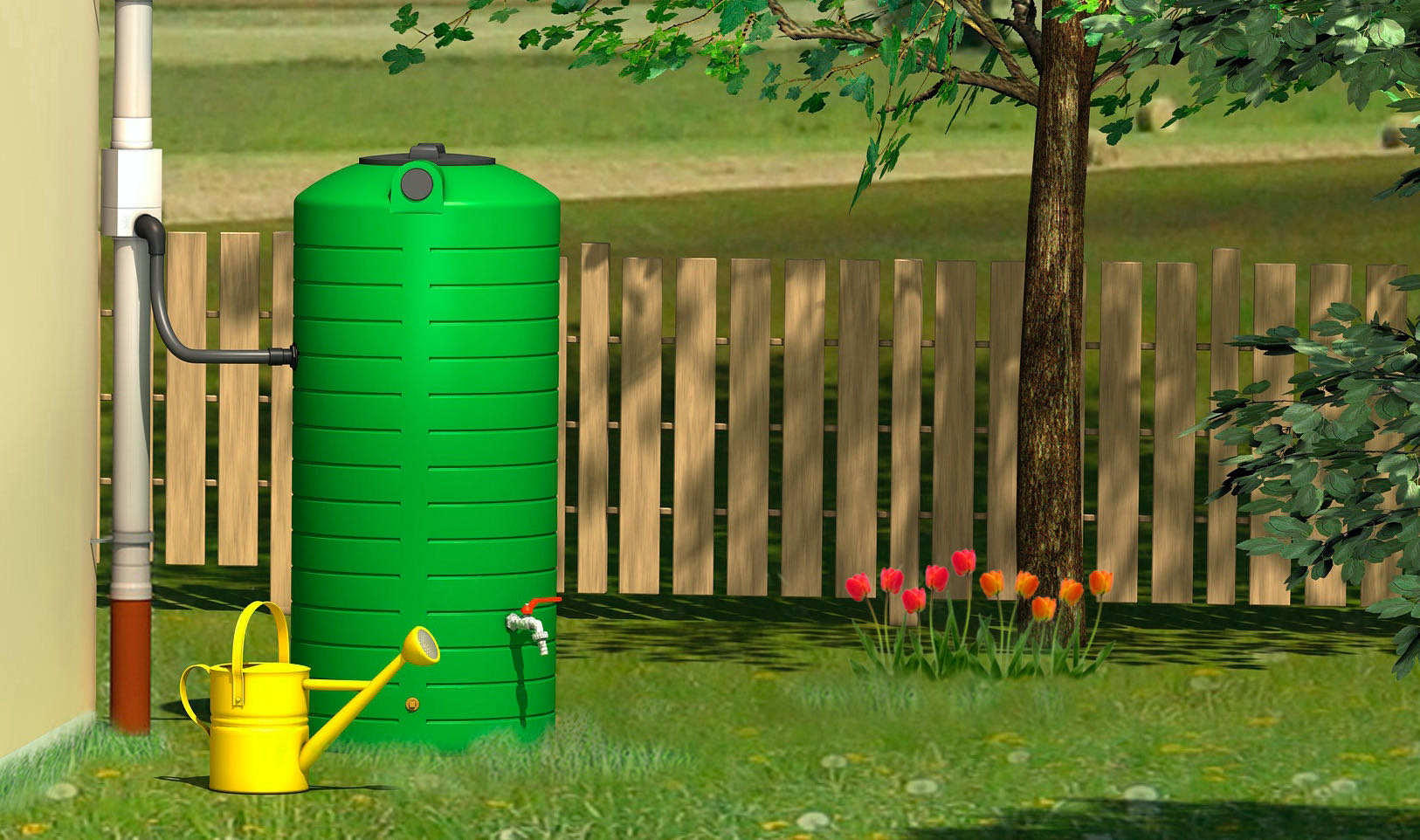
If you want to water your garden sustainably, you should use rainwater instead of tap water. This natural resource can be used efficiently with a rainwater barrel or tank, ideal for anyone who wants to build their own raised bed irrigation system and be environmentally friendly in the process. Mulching with leaves or straw also helps to reduce evaporation and retain moisture in the soil. The choice of plants also plays an important role. Species with low water requirements, such as Mediterranean herbs or drought-resistant flowers, help to reduce water consumption.
Smart systems with sensor control, for example connected to a drip irrigation system with a hose, are ideal for using water in a targeted manner. This technology delivers the water directly to the roots and prevents unnecessary losses due to evaporation or overwatering. Enriching the raised bed with additional materials such as coconut fibres improves the soil's storage capacity and ensures an even supply of moisture. This makes it possible to provide the plants with optimum care, conserve valuable resources and at the same time make an important contribution to environmental protection, in line with WISY's sustainable solutions.
Avoid common problems and mistakes
A common problem when watering raised beds is that they are watered too frequently. However, too much water can favour root rot. The right balance is crucial. Equally problematic is an uneven water supply, which can cause growth problems or crop failure. An even distribution of moisture is crucial in order to create stable growing conditions and provide the plants with an optimum supply.
The timing of watering also plays a major role. If you water in the midday sun, you run the risk of a large proportion of the water evaporating before it can even penetrate the soil. Instead, watering should take place in the early morning or late evening hours. Furthermore, not all systems are suitable for raised beds: Lawn sprinklers, for example, usually only moisten the leaves, wasting water and promoting fungal diseases. Watering cones or drip systems that channel the water directly to the roots are much more efficient.
Another point that is often underestimated is the correct raised bed irrigation and drainage. Raised beds without sufficient water storage or a drainage layer dry out much more quickly, which can be particularly problematic in hot summer months. Regular monitoring of soil moisture helps to avoid over- or undersupply. With suitable WISY solutions for rainwater harvesting and clever irrigation techniques, raised bed maintenance can be optimised in the long term and the risk of typical mistakes significantly reduced.

The optimal raised bed irrigation for healthy plants
A well thought-out water supply is crucial for vigorous plant growth and a rich harvest. A raised bed with an irrigation system ensures the ideal balance between moisture and air in the soil and prevents both drought stress and waterlogging. The combination of manual and automatic irrigation is particularly effective, offering flexibility, saving time and ensuring that the plants are optimally cared for even in changing weather conditions. Sustainable methods such as using rainwater or mulching with organic materials also help to save water and protect the environment.
There are also numerous DIY options for implementing efficient irrigation in the vegetable garden. DIY systems with drip hoses, clay cones or simple water reservoirs are inexpensive, durable and customisable. It is important to check the irrigation regularly and adjust it to the temperature and rainfall. Those who rely on high-quality materials and sustainable planning create the basis for healthy plants, high yields and a resource-saving garden, supported by the innovative solutions from WISY.
Ihr Schritt zu einem nachhaltigeren Garten
Eine Regentonne aufzustellen, ist ein einfacher Schritt mit großer Wirkung für Ihren Garten und die Umwelt. Mit der richtigen Auswahl, Installation und Pflege nutzen Sie die Vorteile des Regenwassers optimal und bewässern Ihren Garten nachhaltig. Beginnen Sie noch heute und machen Sie Ihren Garten zu einem Vorbild für ökologisches Gärtnern. Langfristig profitieren nicht nur Ihre Pflanzen, sondern auch Sie selbst. Durch die Nutzung von Regenwasser senken Sie Ihre Wasserkosten, verringern den ökologischen Fußabdruck Ihres Haushalts und schaffen ein harmonisches Gleichgewicht zwischen Natur und Mensch.