


Setting up a rainwater butt: A comprehensive guide for your garden
Using rainwater is a simple yet effective way to water your garden sustainably and reduce your water consumption. This guide shows you, step by step, how to install and set up a rainwater tank, and how you can make a valuable contribution to protecting the environment.

Why should you install a rain barrel?
Installing a rain barrel in your garden has several advantages:
- By using rainwater instead of tap water, you can significantly reduce your water consumption and the associated costs.
- Plant health: Rainwater is soft and free from chlorine, limescale and other chemicals that can be found in tap water. This can improve the health and growth of your plants.
- Environmental protection: The use of rainwater reduces the burden on the municipal water supply and reduces the ecological footprint of your household.
Choosing the right rainwater barrel
When choosing the right rainwater barrel, you should consider several factors to ensure that it meets your needs. Firstly, the volume of the barrel is important. It should be tailored to the size of your garden and your average water consumption. Smaller gardens can often manage with a 200-litre bin, while larger areas may need one or more bins with a capacity of 500 litres or more.
Materials also play a role. Plastic rain barrels are popular as they are lightweight, durable and available in many shapes and colours. Wooden barrels blend naturally into the garden, but require more maintenance to remain weatherproof. Metal barrels offer great longevity but can corrode over time if not treated properly. Also consider the design and possible additional features, such as integrated planters or the option to link multiple barrels together to increase water storage capacity.
Another option is concrete rain barrels. They are characterised by their enormous stability and durability and are particularly weather-resistant. Concrete also retains the temperature of the water very well, which reduces the formation of algae inside. These barrels are ideal for permanently installed rainwater systems and are also visually appealing.
Choosing a location
and installation
Choosing the right location for your rainwater tank is crucial to its efficiency and functionality. Ideally, the tank should:
- Be situated near a downpipe so that rainwater can be collected as easily as possible.
- Be placed on a firm, level surface to ensure stability.
- Be positioned in an easily accessible spot so that you can use the water without too much effort.
Installation steps:
- Adjust the downpipe: Determine the optimum height for your rainwater collector so that the rainwater tank fills automatically, but excess rainwater is flushed away along with leaves or moss.
- Install the rainwater collector: Shorten the downpipe accordingly. Use a saw to make a clean cut, then flare or file the lower edge of the upper downpipe slightly outwards to direct the flow of water towards the pipe wall.
- Connecting the rain barrel: Place the rain barrel next to the rain collector and connect the two. Make sure the rainwater tank lid is securely fitted to prevent contamination and the breeding of mosquitoes.
Care and Maintenance
To ensure the longevity of your rainwater tank and the quality of the collected water, regular care and maintenance are important:
- Regular cleaning: Inspect the downpipe filter once or twice a year and clean the low-maintenance WISY filter insert in the dishwasher.
- Winter protection: Empty the tank in winter to prevent damage caused by freezing water.

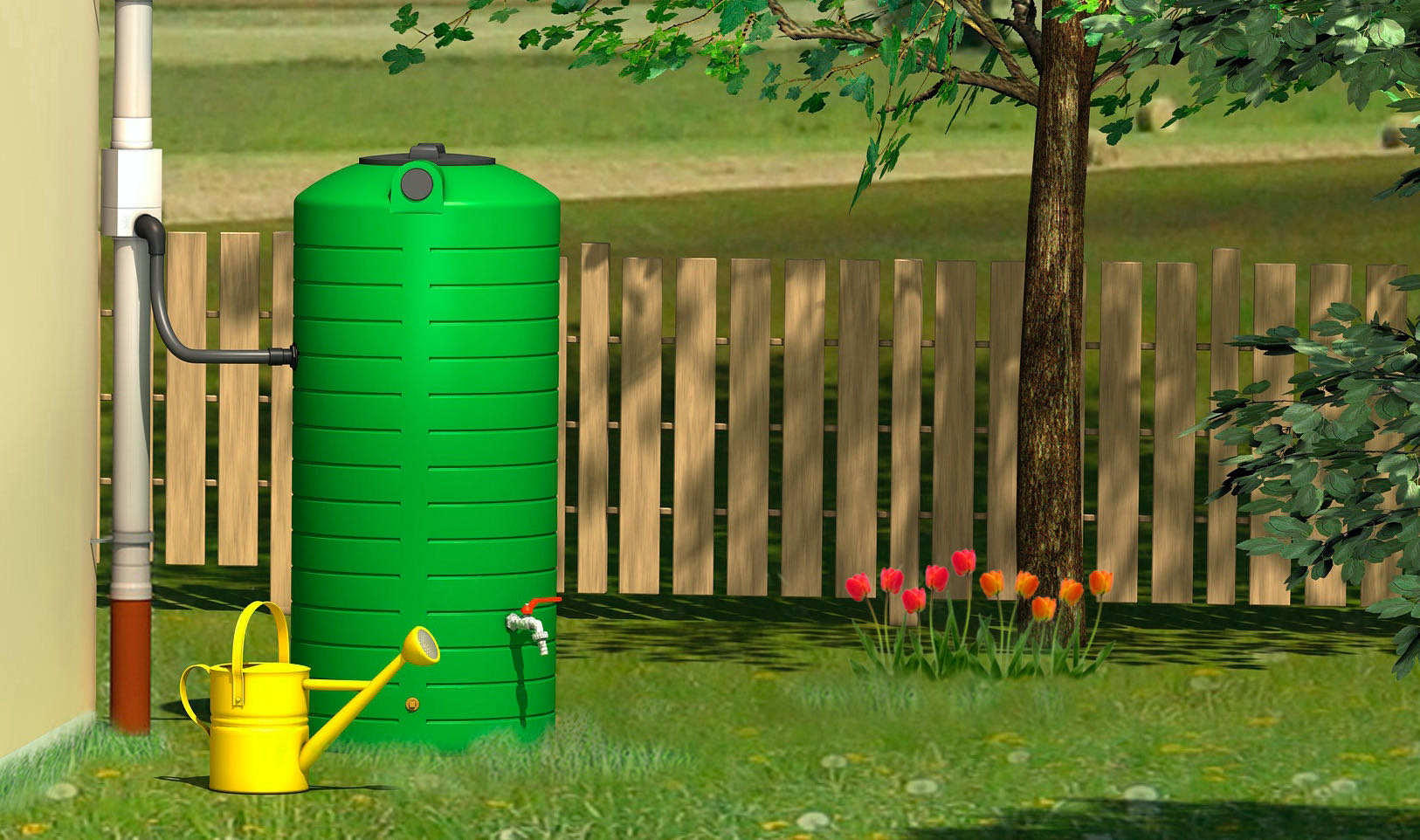


Innovative watering systems and rainwater tanks
Modern rainwater tanks can be combined with innovative watering systems to maximise water efficiency. Drip irrigation or automatic systems can be connected directly to the rainwater tank, ensuring an even, needs-based water supply for your plants. Such systems not only save water, but also save time and effort when tending to your garden.
Solutions with built-in timers or moisture sensors are particularly practical. These systems measure soil moisture and only release water when it is actually needed. This prevents over-watering, which not only benefits the plants but also conserves water as a resource. What’s more, smart systems can be controlled via an app. This is ideal for anyone who wants to ensure their flowerbeds are well looked after, even whilst on holiday or in changeable weather.
Legal aspects and funding opportunities
Before installing a rainwater tank, find out about local regulations and any available funding schemes. In some regions, financial support is available for the purchase and installation of rainwater harvesting systems.
The aim of such schemes is the sustainable management of water resources. Many towns and local authorities support residents who use rainwater to relieve pressure on the sewerage system and prevent flooding during heavy rainfall. Support may take the form of grants, reimbursement of material costs or tax benefits. You can usually find information on this on your local authority’s website or at local environmental agencies. It’s worth enquiring before buying a rainwater tank; you can often save part of the purchase cost through a grant scheme, whilst at the same time making an important contribution to environmental protection.

Integrating
rain barrels
into
your garden Rain barrels don’t just have to be functional; they can also be integrated aesthetically into your garden. Here are a few ideas:
- Cladding: Use wooden or stone cladding to blend the barrel into the garden landscape.
- Planting: Place planters on or around the barrel to enhance its appearance.
- DIY projects: Creative DIY projects such as painting or designing a mosaic cladding give your garden a unique flair.
Environmental aspects and sustainability
By collecting and using rainwater, rainwater harvesting actively contributes to adapting to climate change. At a time of increasing periods of drought and extreme weather events, having your own water storage system helps you to use water efficiently and avoid shortages.
Using rainwater not only saves drinking water, but can also promote biodiversity by creating a natural, open water source for plants and animals in your garden. This also has a positive effect on your garden’s microclimate: the water evaporates slowly, ensuring more pleasant temperatures and higher humidity on hot days. Every rainwater butt is therefore a step towards a more sustainable, climate-resilient garden.
Your step towards a more sustainable garden
Installing a rainwater butch is a simple step that makes a big difference to your garden and the environment. With the right choice, installation and maintenance, you can make the most of rainwater and water your garden sustainably. Get started today and turn your garden into a model of eco-friendly gardening. In the long term, it’s not just your plants that will benefit, but you too. By using rainwater, you’ll reduce your water bills, lower your household’s carbon footprint and create a harmonious balance between nature and people.