


Collecting pits for waste water
If you are concerned with reliable property drainage, collecting pits for wastewater quickly come into focus. This solution plays a particularly important role where controlled collection of domestic wastewater is required. For you as an operator, building owner or planner, it is worth taking a closer look at the function, area of application and technical classification.

Key points at a glance
Key points:
- Collection pits are the ideal solution where there is no connection to the public sewerage system.
- The correct design is crucial for safety, installation costs and long-term cost-effectiveness.
- Permits, inspection requirements and leak-tightness certificates are crucial for legally compliant operation.
- Maintenance, emptying and level monitoring should be planned for at an early stage to reduce costs and downtime.
- High-quality, leak-proof and durable systems make an important contribution to environmental protection and sustainability.
- A well-considered choice provides you with greater convenience, operational reliability and protection of your investment.
This is how you lay the foundations for a safe, durable and cost-effective wastewater solution.
The foundation
of
modern wastewater disposal
Wastewater collection tanks offer a reliable solution if a property cannot be connected directly to the public sewerage network. They collect domestic wastewater safely, thereby laying the foundation for proper disposal. A solid construction is crucial, as only watertight systems provide long-term protection against odour problems or costly consequential damage.
In practice, concrete or plastic tanks are primarily used. Concrete offers the advantage of high stability and robust integration into the ground. Plastic scores points for its low weight and ease of handling. Which option is right for your project depends on local conditions, the installation and operational requirements.
- The appropriate size depends on the number of residents and average water consumption.
- Low-maintenance systems save time, reduce running costs and improve operational reliability.
Where connection to the public sewerage network is not possible, sewage collection pits, in accordance with local regulations, are a well-established solution for decentralised wastewater disposal. High-quality products offer you a long service life and long-term investment security. A sewage tank in the garden or a sewage pit in an allotment is particularly relevant where sewage needs to be collected reliably and disposed of properly.
The different types of construction
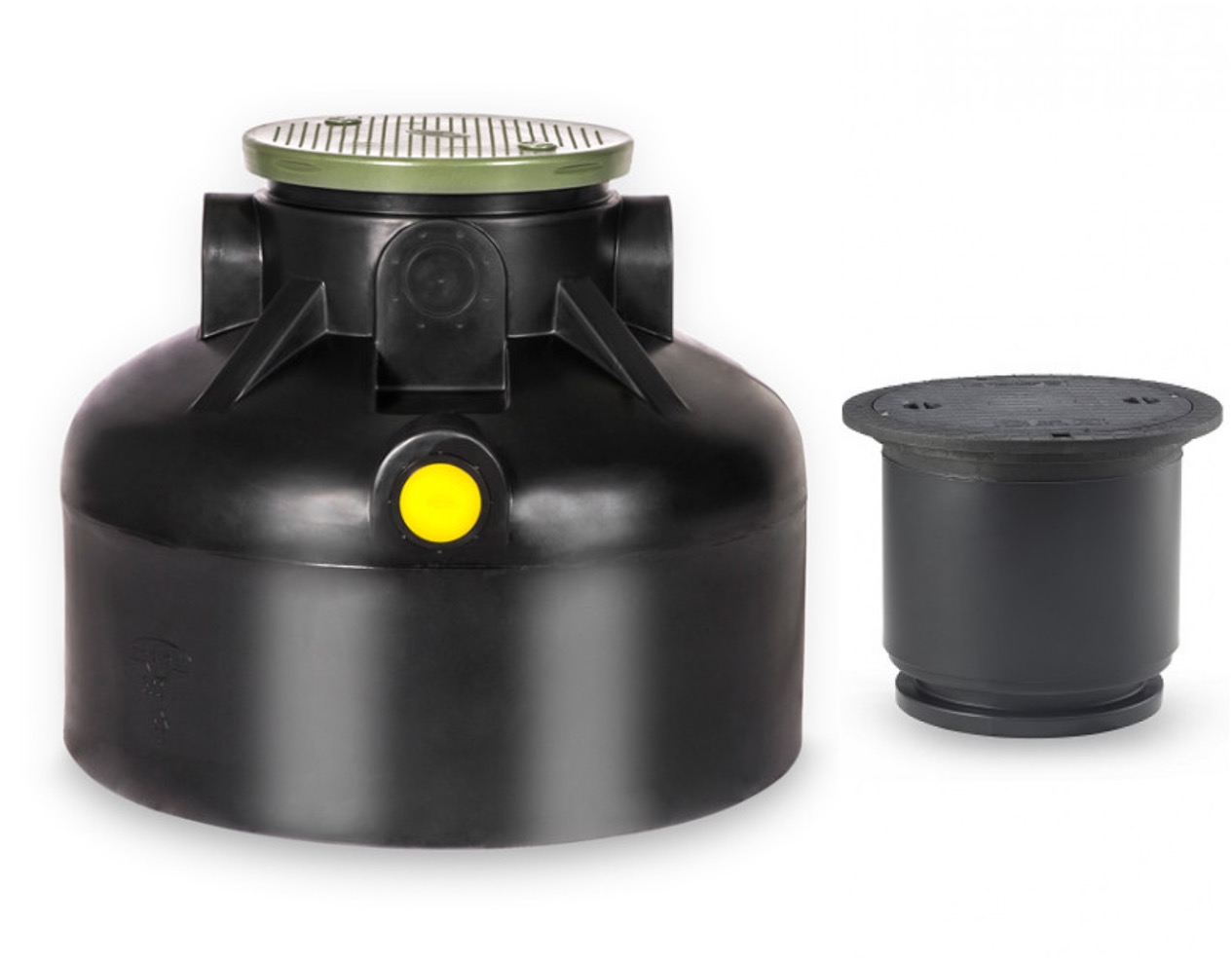
For you, the type of construction is a key factor in determining how safely and cost-effectively a collection pit operates. A lightweight plastic collection pit is easy to transport, is corrosion-resistant and simplifies installation. A concrete sewage collection pit, on the other hand, offers high robustness and retains its shape even under heavy pressure.
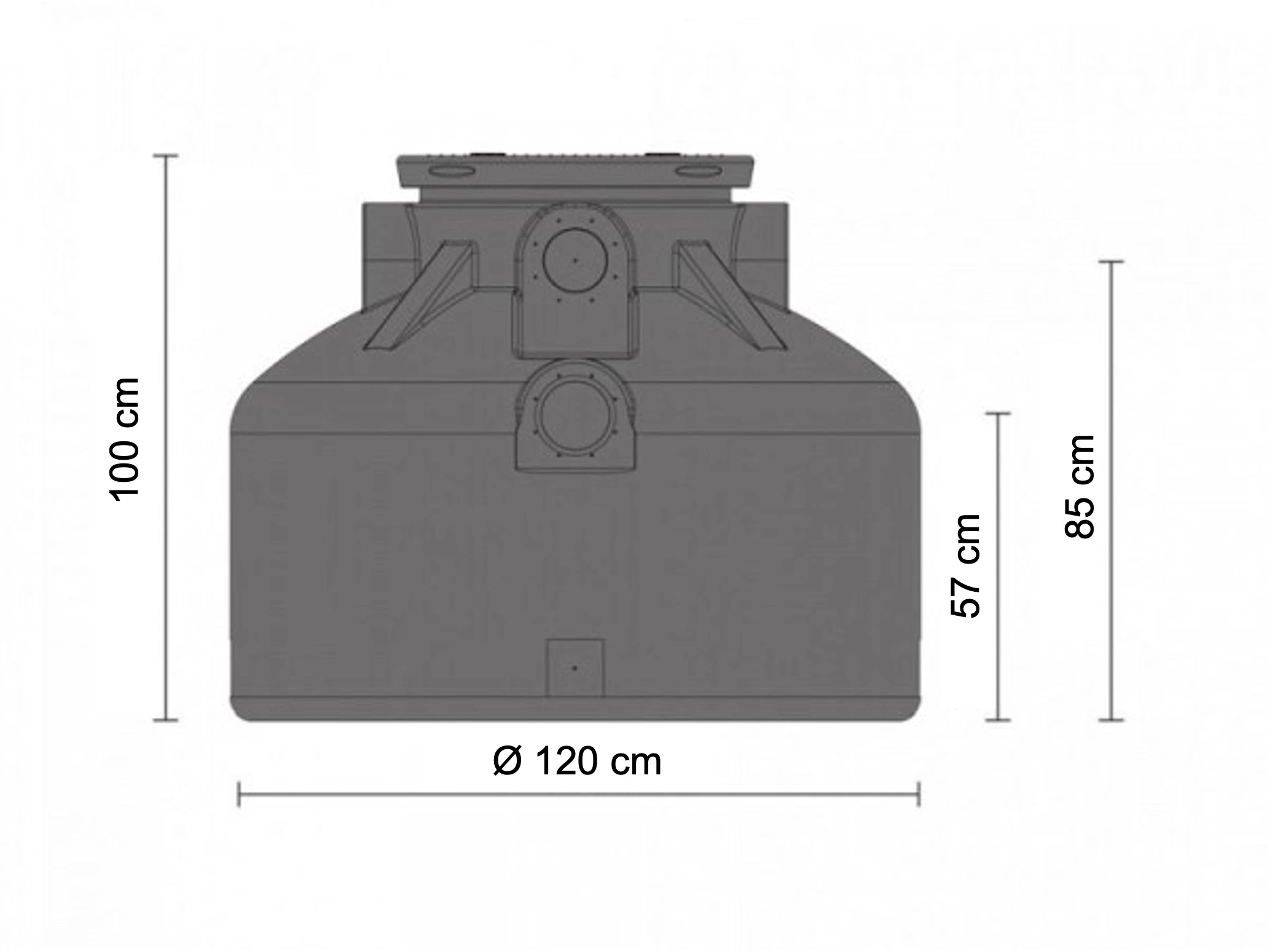
In difficult ground conditions, shallow-profile variants offer advantages. They are particularly suitable for plots with a high water table, as they require a shallower installation depth. Ready-made solutions also save time during installation and help you reduce the amount of work required on site.
- Modular systems allow for expansion should your requirements increase in the future.
- Lids and covers differ in terms of use, maintenance and access.
If you are planning a greywater cistern, the precise choice of material, design and fittings depends on the intended use, the available space and the load it will have to bear.




Legal requirements and permits
The installation of a sewage collection tank is subject to binding requirements, which are regulated by the relevant local authority. In practice, the system is usually subject to a notification or authorisation requirement. Standards such as DIN EN 12566, together with other technical regulations, set out clear requirements for planning, installation and operation.
Similarly, specified distances from buildings, neighbouring properties and wells must be observed. Mandatory leak tests serve to protect the environment, as only systems that remain leak-proof over the long term can reliably protect the soil and groundwater. You should also factor the leak test for a collection pit and the associated costs into your planning at an early stage.
- Regular inspections by specialist contractors help to identify any faults in good time.
- Consulting the relevant authorities at an early stage helps to avoid delays and additional costs.
Maintenance and emptying of collection pits
To ensure that your collection pit operates safely in the long term, maintenance and emptying should be taken into account from the outset. The emptying intervals depend on the size of the pit and how frequently it is actually used. Proactive planning helps you to avoid unnecessarily frequent collections and reduce ongoing emptying costs in the long term.
The removal of the wastewater is carried out by authorised specialist companies, which professionally extract the contents and dispose of them in an environmentally sound manner. A modern extraction system for collection pits can further simplify the emptying process and make it cleaner. A drainless collection pit, in particular, must be inspected regularly to ensure that it continues to operate reliably and without avoidable breakdowns.
Leak tests are equally important, as they ensure long-term functionality and prevent damage to the system and the surrounding area. A long-term maintenance contract also provides transparency, improves cost control and gives you greater planning certainty regarding operation and servicing.
Sustainability and environmental considerations
Sustainability begins with the quality of the materials and a design that remains leak-proof over the long term. High-quality materials prevent wastewater from seeping into the ground, thereby making an important contribution to the protection of sensitive environmental areas. For you
,
this means greater operational safety and a reliable long-term solution.Statutory requirements are not merely a matter of formal compliance, but are primarily intended to protect groundwater and drinking water quality. Leak-proof guarantees and professionally installed systems actively contribute to environmental protection, as they significantly reduce the risk of contamination.
Even collection pits can be integrated into a sustainable overall concept when combined with modern rainwater harvesting systems. In this way, you clearly separate the safe collection of wastewater from the sensible use of available water resources and improve the overall environmental performance of your project.
Responsible technology thus not only supports day-to-day operations but also helps to safeguard the future of your facility. Those who opt for durable, watertight and well-designed systems are investing in environmental sustainability, value retention and planning certainty.

Costs and Cost-Effectiveness of Sewage Collection Pits
The cost-effectiveness of a collection pit is not determined by the purchase price alone. Purchase costs vary depending on the material, size and design, whilst installation costs depend heavily on ground conditions, excavation work and transport costs. It is therefore worth carrying out a detailed comparison before deciding on a system.
- Durable systems deliver significant long-term cost savings.
- In suitable cases, grant schemes can further reduce the investment.
Running costs should also be taken into account at an early stage. The costs associated with a septic tank arise primarily from emptying, maintenance and regular inspections. Good planning helps you to better estimate these expenses and avoid unnecessary additional costs.
An objective comparison of different solutions provides clarity on potential savings. High-quality septic tanks may be more expensive to purchase, but over many years they often prove to be more cost-effective than simple, low-cost systems. Fewer repairs, a lower risk of breakdowns and a longer service life significantly improve the overall balance sheet.
By considering material quality, installation costs and running costs together, you can make a sound decision. This allows you to keep a long-term eye on the cost-effectiveness of your system and invest in a solution that delivers both technically and financially.
The technology behind it
Level sensors:
Level sensors reliably monitor the current level and help you to react to changes in good time. This monitoring is particularly important for a faecal waste tank, so that critical fill levels can be detected at an early stage.
Digital control systems:
Digital control systems allow you to monitor the system smartly via mobile devices and simplify day-to-day monitoring. This allows you to quickly access and conveniently analyse key operational data.
Alarm systems:
Alarm systems warn of imminent overfilling and help to prevent damage to the system at an early stage. This increases safety and reduces the risk of unplanned downtime.
Operating concepts:
Simple operating concepts ensure user-friendly operation and make the technology easier to understand in day-to-day use. Clear displays and logically structured functions help you to control the system safely.
Ventilation systems:
Automatic ventilation systems prevent unpleasant odours and support hygienic operation. This improves user comfort and helps to ensure the system remains clean at all times.
Integration into building services:
Integration into existing building services is possible in many cases and makes the system much easier to use. This allows messages and relevant data to be recorded and monitored centrally.
Innovative comprehensive solution:
Innovative technology noticeably enhances comfort and operational reliability. As a result
,
modern sewage collection tanks operate in a more controlled, user-friendly and cost-effective manner.
Collection tanks are essential where there is no mains drainage connection
Where there is no mains drainage connection, a collection tank is essential. Different designs provide suitable solutions for a range of requirements; statutory requirements ensure environmental protection and functionality; and good planning facilitates maintenance and emptying. A high-quality septic tank combines sustainability, a long service life and cost-effectiveness, meaning that a well-considered choice delivers noticeably greater safety and convenience.